Synth Waveforms Explained
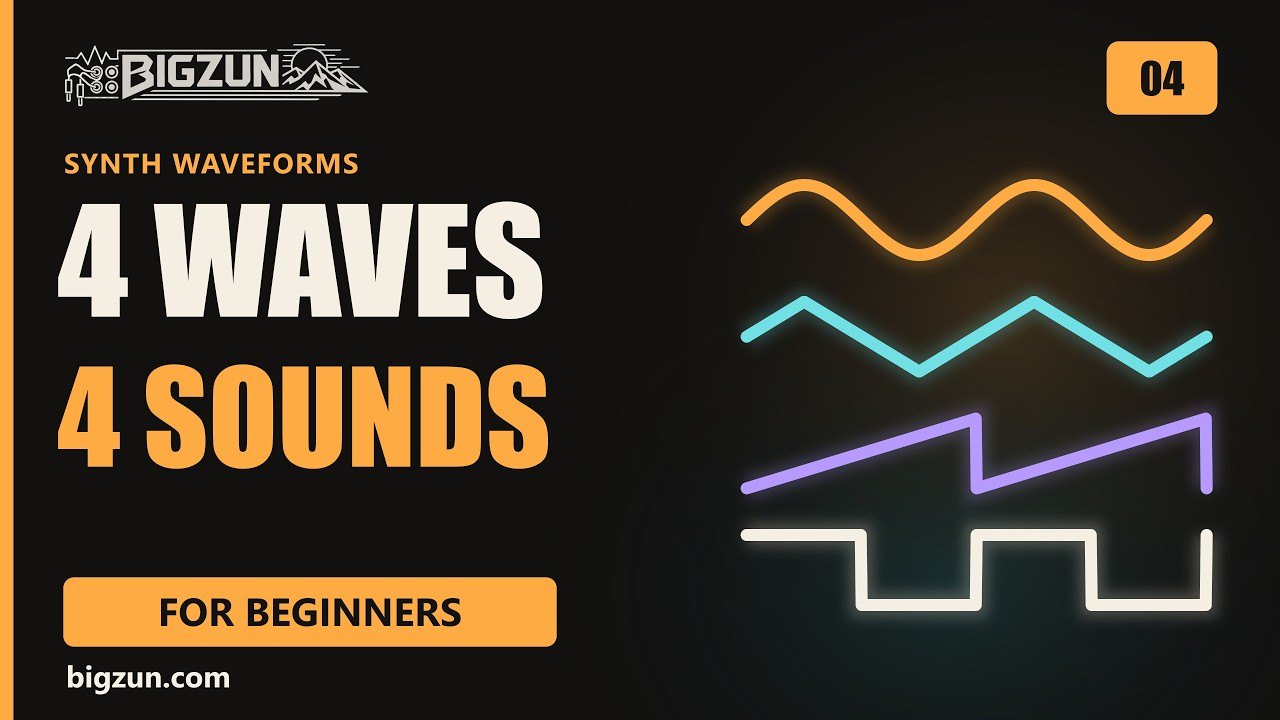
Synth Waveforms Explained for Beginners – episode 4 of BIGZUN Modular Academy, a free step-by-step video course about sound, synthesis and modular synthesizers. Made for beginners, no experience needed.
Welcome to Bigzun Modular Academy, for beginners. A waveform shows how a signal changes over time. Today, we will see and hear four classic shapes used in synthesizers. Read a waveform from left to right as time passes. Its vertical position shows the signal level. The shape is a graph, not the path an air particle follows. One full repeat is one cycle.
Chapters
- Waveforms
- Read the two axes
- Sine: one smooth oscillation
- Triangle: straight slopes, softer tone
- Sawtooth: a ramp and a reset
- Square: two equal halves
- Pulse width changes the tone
- Four shapes, one fundamental
- Shape and loudness are separate
- A filter changes the waveform
- Mix existing waves with BIGZUN MIX3
- Try it: choose a starting waveform
Lesson notes
Waveforms
Welcome to BIGZUN Modular Academy, for beginners. A waveform shows how a signal changes over time. Today, we will see and hear four classic shapes used in synthesizers.
Read the two axes
Read a waveform from left to right as time passes. Its vertical position shows the signal level. The shape is a graph, not the path an air particle follows. One full repeat is one cycle.
Sine: one smooth oscillation
The sine wave is smooth and simple. An ideal sine contains only one frequency. Its sound is pure and rounded. Listen to this sine at two hundred twenty hertz.
Triangle: straight slopes, softer tone
A triangle rises and falls in straight slopes. It contains odd harmonics that become weaker quickly. Its sound is richer than a sine, but usually softer in character than a square or sawtooth.
Sawtooth: a ramp and a reset
A sawtooth ramps in one direction, then resets sharply. Its harmonic content makes it bright and buzzy. It is a useful starting point for sounds that you plan to shape with a filter.
Square: two equal halves
A square wave spends half of each cycle high and half low. An ideal, centered square contains odd harmonics. Its hollow, strong character is common in electronic bass and lead sounds.
Pulse width changes the tone
Change how long the pulse stays high, and you change its duty cycle. A fifty percent pulse is a square. A narrower pulse has a different harmonic balance. Listen to the tone change while the pitch stays the same.
Four shapes, one fundamental
Now compare sine, triangle, sawtooth, and square at the same fundamental frequency. The note stays similar, but the tone color changes. This quality is called timbre. Listen to the character of each shape.
Shape and loudness are separate
A bright waveform can seem louder than a pure tone. A fair comparison needs similar playback levels. These examples use similar average signal levels, but perceived loudness still depends on the spectrum and your listening setup.
A filter changes the waveform
A low pass filter reduces higher frequency components. Feed it a sawtooth, and the sharp shape becomes smoother as the filter closes. The fundamental can stay the same while the sound becomes darker.
Mix existing waves with BIGZUN MIX3
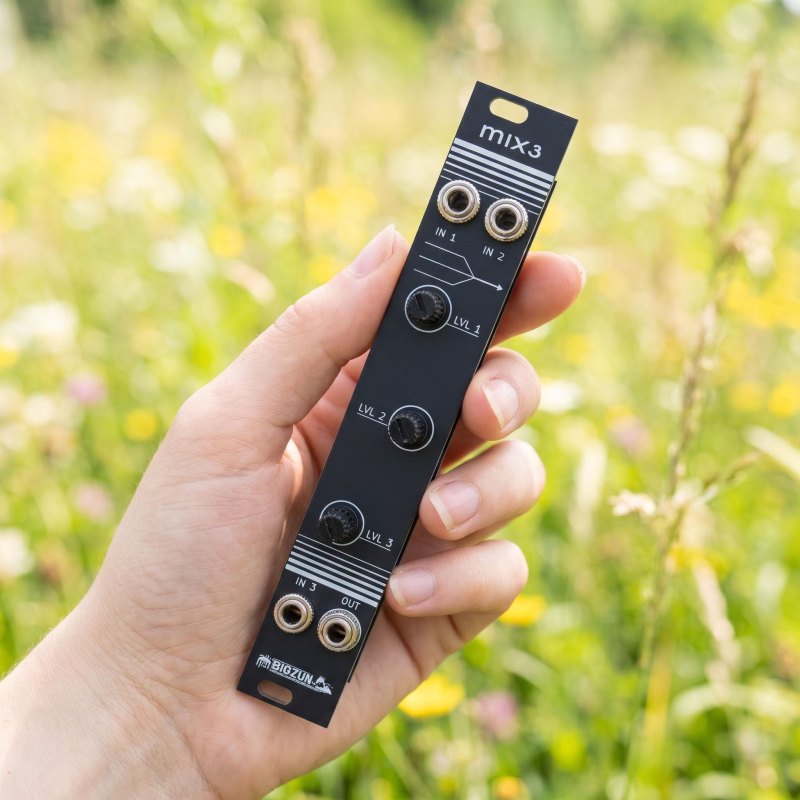
The BIGZUN MIX three combines existing signals with separate level controls. Mix a sine with a sawtooth to change their balance. The resulting shape depends on the levels, frequencies, and phase relationships of the inputs.
Try it: choose a starting waveform
Choose a sine for a pure starting tone, a triangle for gentle richness, or a sawtooth or square for a stronger harmonic character. Listen first, then shape the sound. Next, we explore harmonics. Continue at bigzun.com.